GL Record and subcodes
Last updated October 7, 2026
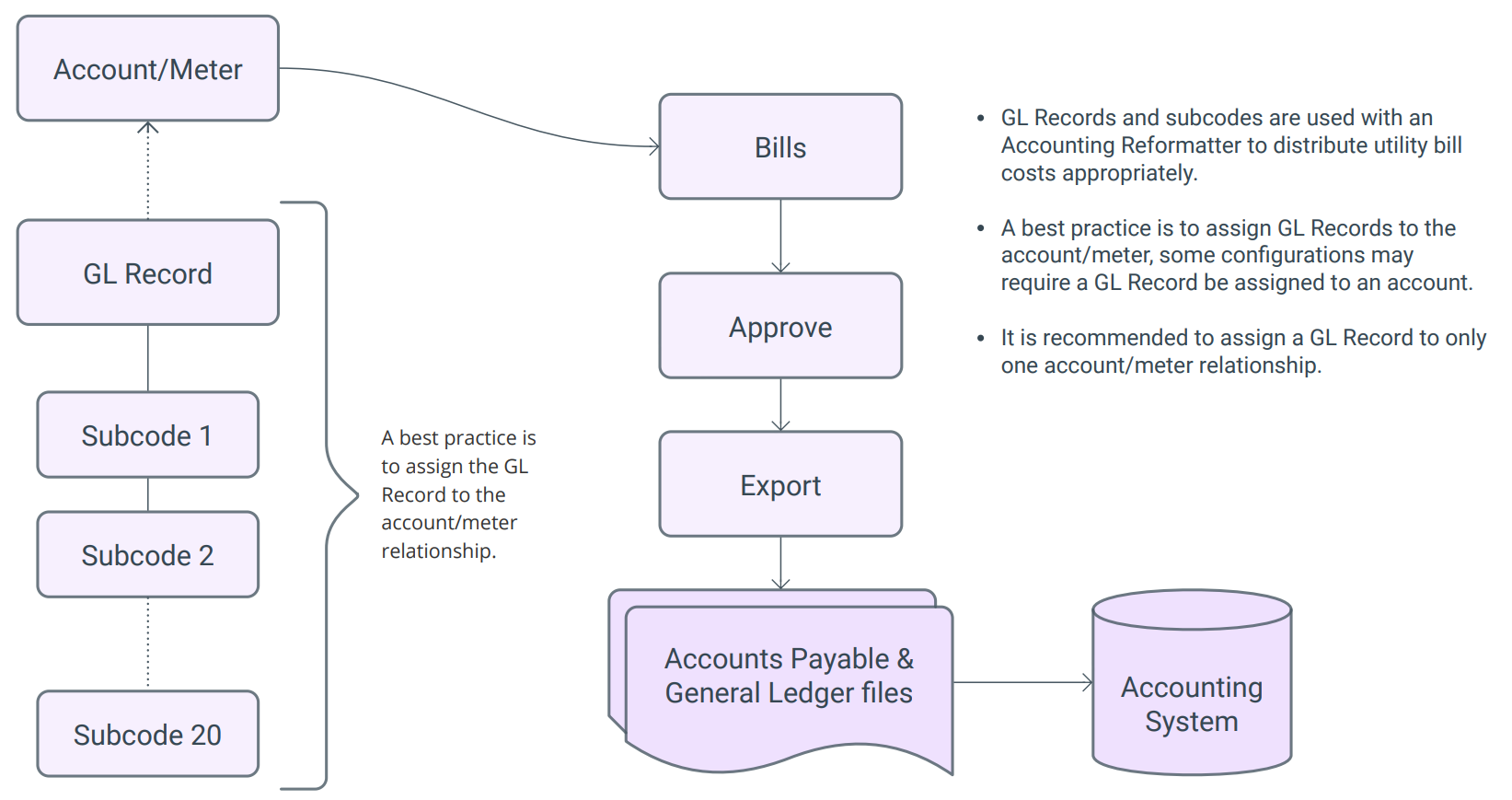
GL Records and subcodes let you store and export billing information to an external accounting system. A GL Record acts as a container holding up to twenty subcodes—each with a label and value that maps to your organization's accounting structure. GL Records are assigned to account/meter relationships and travel with bills as they move through EnergyCAP.
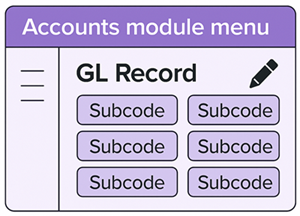
As a best practice, assign a unique GL Record to each account/meter relationship. When you update the subcode values it affects ALL meters and accounts with the GL Record.
To review GL Record and subcode configuration—use the Update_GLCodesAndSubcodes spreadsheet or Report-03 (Setup Report).
This is different from bill export status. To see whether specific bills were exported to AP or GL, use a bill report such as Report-20, Report-05, or Report-15 with the Exported to AP or Exported to GL filters.
Meter GL Records and Account GL Records
EnergyCAP supports two types of GL records: meter GL records and account GL records. Meter GL records are preferred because they give you precise control over how costs are assigned. Account GL records apply to every meter associated with an account, which can make it difficult to properly manage and allocate costs when meters have different reporting needs.
Manage GL records
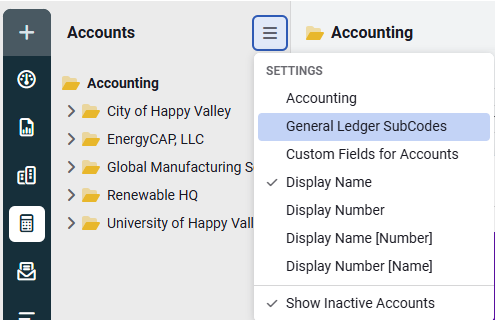
You can manage GL subcodes in the Accounts module menu (three stacked lines at the top of the hierarchy panel) without subscribing to the Accounting Export feature.
The GL Record is created by combining the account number | vendor code | meter code for each account/meter relationship.
Think of the GL Record as a container holding the twenty subcodes and their values. Assign this container to one (this is recommended) or many account/meter relationships. The GL Record value is limited to 255 characters.
Set subcode values based on your organization's structure and rules.
Assign GL Records to bills
As bills enter EnergyCAP they are assigned a Meter GL Record. If a GL Record is created after the bills are entered, these bills are missing their GL Record and associated subcode values. To update these bills, you can move the bills back to their existing location.
Steps to edit and update GL Record values
To update the GL Record or subcode values:
- Select the Meter or the Account.
- On the Properties tab, click the pencil to Edit Linked Account or the Linked Meters.
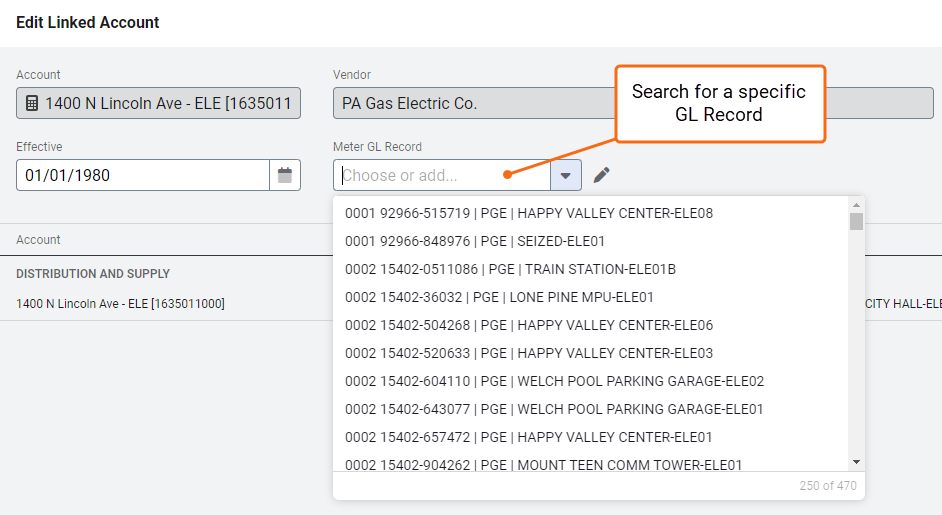
- Click the pencil for Meter GL Record.
- Choose a new GL Record.
You may need to search for the record because the drop-down only shows the first 250 records.
- Click Save.
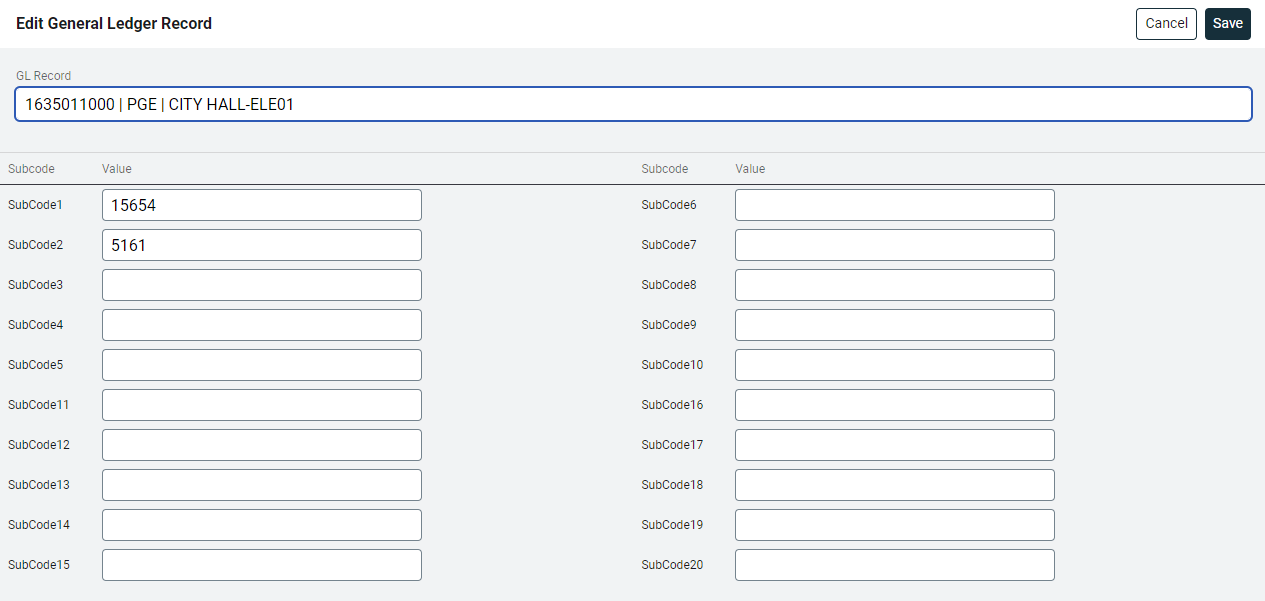
GL subcodes can also be updated with a spreadsheet.
Delete an Account GL Record
- Select the account.
- From the Actions menu choose Edit Account.
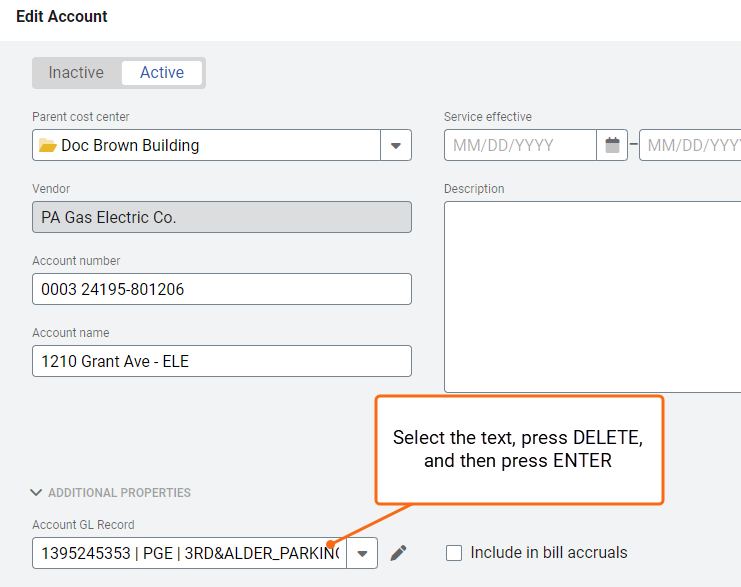
- Select the text in the Account GL Record field.
- Delete the text. When you remove the GL Record, it is not deleted, this only removes the association between the record and the account. The GL Record may be in use for another account.
- Press the Enter key to confirm.
- Click Save.
Update GL subcode label and type
In the Accounts module menu, choose General Ledger Subcodes.
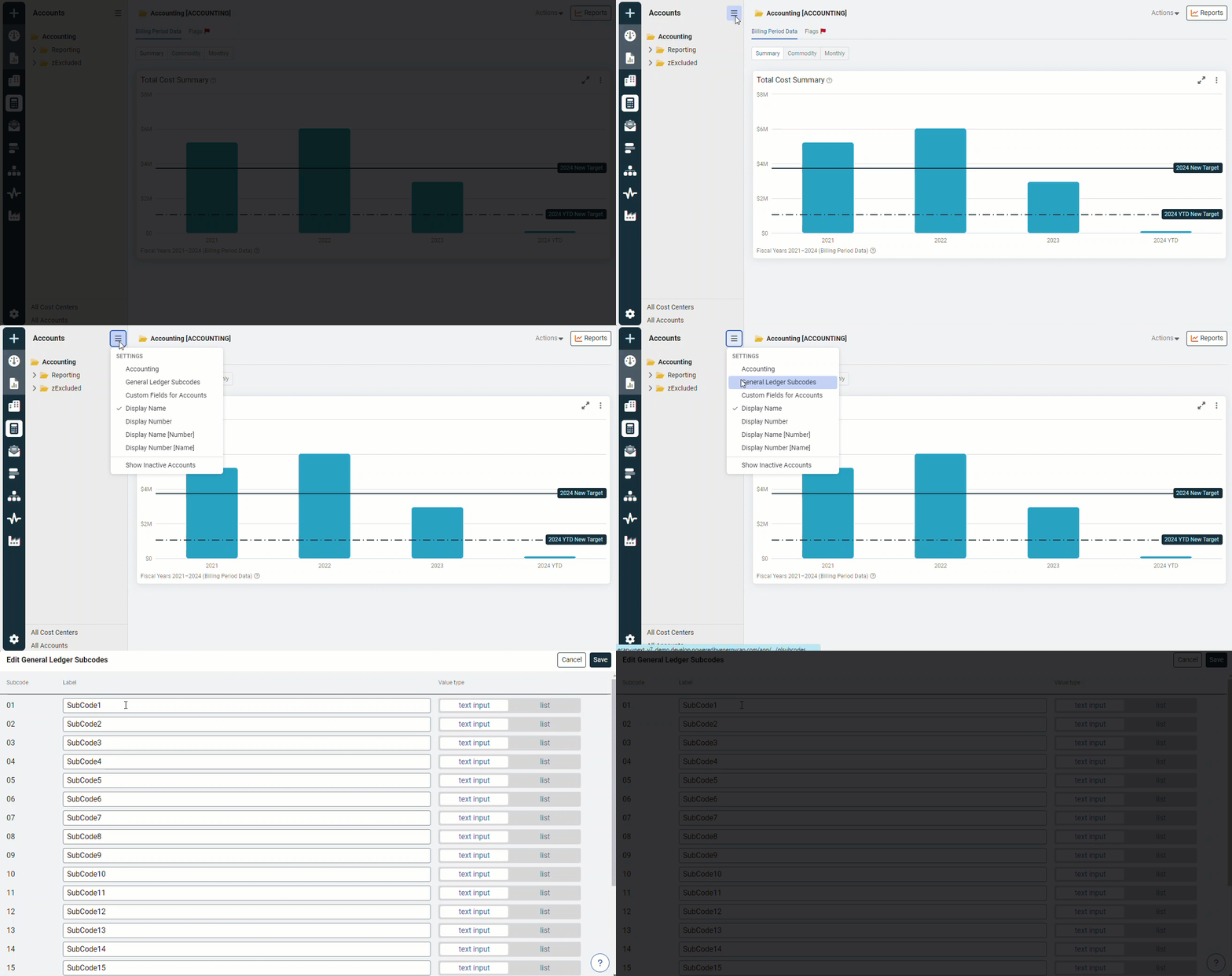
Update the label for the subcode or edit the type. Use the list option to avoid data entry errors.
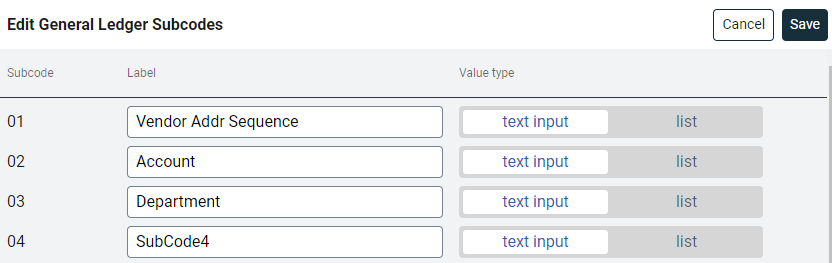
Example subcode configuration
| Subcode | Label | Subcode | Label |
| 01 | Company Code | 11 | not used |
| 02 | Accounting Unit | 12 | not used |
| 03 | Account | 13 | not used |
| 04 | Sub Account | 14 | not used |
| 05 | not used | 15 | not used |
| 06 | not used | 16 | not used |
| 07 | not used | 17 | not used |
| 08 | not used | 18 | Parent Vendor ID |
| 09 | not used | 19 | Parent Account number |
| 10 | not used | 20 | Export Flag |
Only certain user roles can manage GL Records.
Permissions
A roles and permissions audit report is available for download on the Users and Roles page. The report lists each role and the permissions assigned to it. It does not include per-user login timestamps or user activity data.
Custom user roles are created by administrators.